
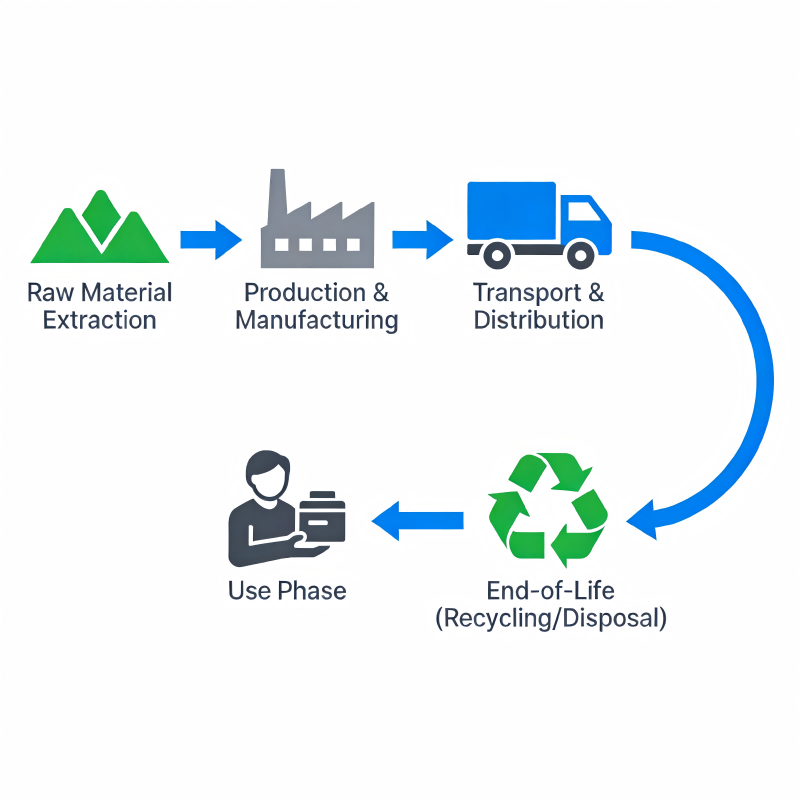
When selecting sustainable packaging materials, the intuitive choice—replacing plastic with paper, glass, or aluminum—is not always the most environmentally sound option. Life Cycle Assessment (LCA) provides a framework for understanding the full environmental footprint of packaging systems, revealing trade-offs that simple material comparisons often miss.
The Hidden Costs of Material Switching
A comprehensive study from Michigan State University examined PE packaging against alternatives including paper, glass, aluminum, and steel across five applications: collation shrink films, stretch films, pallet wraps, heavy-duty sacks, non-food bottles, and flexible food pouches . The findings challenge common assumptions: PE packaging showed average life cycle global warming potential savings of approximately 70% compared to alternative materials.
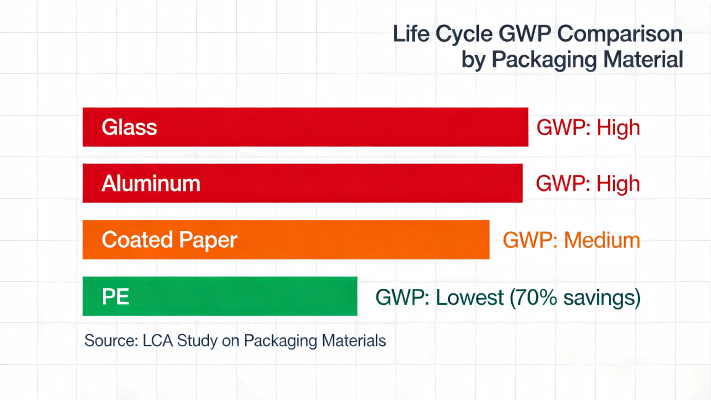
In 16 of 19 product comparisons, PE yielded lower global warming potential, water scarcity, and mineral resource use. The exceptions were typically lightweight paper alternatives that required additional plastic liners to meet functional performance requirements. Glass, aluminum, and steel showed the highest environmental impact due to their weight and energy-intensive production .
A Product-Packaging System View
Traditional LCA studies often examine packaging in isolation, but a more comprehensive approach looks at the product-packaging system as an integrated unit. Research on cement, milk, shampoo, and bottled water found that for high-impact products like cement and milk, reducing product loss yields the greatest environmental footprint reductions. Packaging is not always the dominant contributor to total system impact .
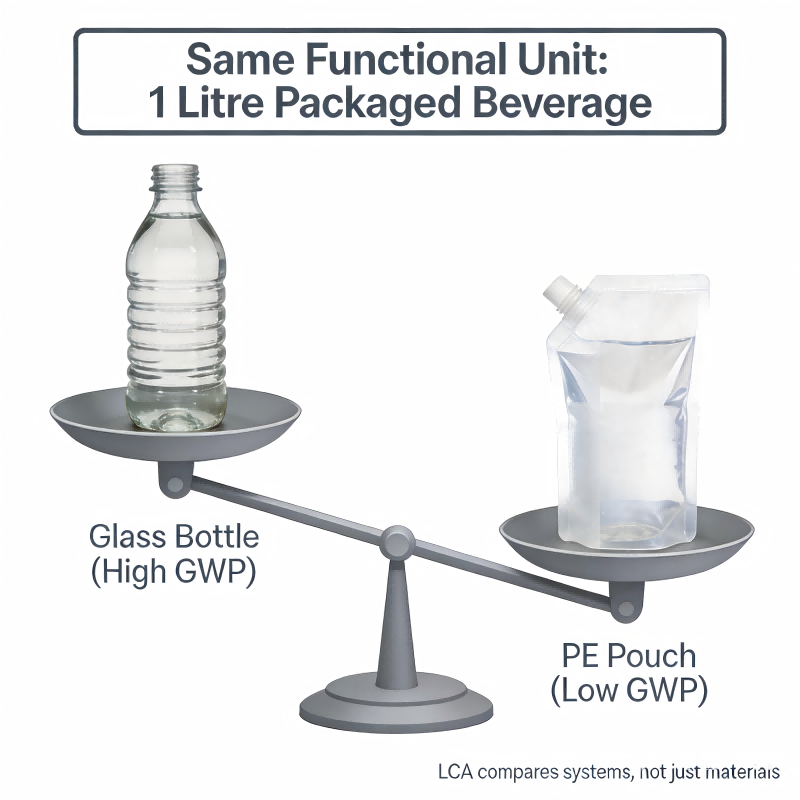
This finding has significant implications for eco-modulation policies that prioritize material recovery. As researchers note, “policy-favored attributes, such as recycled content and recyclability, do not consistently deliver lower system EF,” emphasizing the need to model full life cycle and functional performance .
Practical Implications for Packaging Procurement
For purchasing managers and engineers, these findings suggest:
Paper alternatives are not automatically more sustainable, particularly when requiring coatings or liners
Material weight and production energy matter—lighter packaging may have lower overall impact despite end-of-life concerns
Product protection is critical—packaging failure leading to product loss can negate environmental benefits
Regulatory approaches should consider full lifecycle impacts to avoid unintended consequences
As the industry moves toward harmonized LCA methodologies, packaging buyers should demand transparency in environmental claims and consider full-system impacts rather than single metrics .